Edward Alfred Henry Schmidt
London · the United States Navy · Kittery, Maine · 1833–1881
Who he is. Edward Alfred Henry Schmidt is the Schmidt this family is named for — a London-born son of a Prussian schoolmaster who came ashore at Kittery, married Mary Catherine Dudley in 1861, and is buried there. Everyone at this reunion descends from him.
Where. Born in London; the United States Navy; then Kittery Point, on the road running from the Navy Yard toward Spruce Creek.
He was three years and eleven months old on the day he was christened, and so were his brother and his sisters.
Edward Alfred Henry Schmidt was born in London on 17 September 1833. He was baptised at Old Church, St Pancras, on 24 August 1837 — sixteen days after his parents were married. All five of the children were carried to the font together that day. The youngest, Julia Sophia, was fifteen weeks old.
His father was Otto Schmidt, and every document that names him gives the same occupation: teacher of languages. His mother was Henrietta Adonis Jourdan.
She died on 23 June 1842, at Parsons Green. Edward was eight. That same month his father was writing to a London charity for help. The household came apart, the children were scattered, and the father lived apart from them.
By 1851 he was in service.
The census of 30 March that year finds him in a Holborn household that is not a family at all — a head of twenty-seven, an assistant of twenty-five, and Edward, seventeen, errand boy, living on the premises of a chemist's shop in legal London.
(The index reads "grand boy." The image reads errand boy — one letter, and the whole meaning of the household turns on it.)
In November 1851, at eighteen, he sailed alone for New York. He had nothing to leave.
What he did for the next seven years is not known. It is the largest hole in his life and this project has not filled it.
On 28 September 1858 he walked into a naval rendezvous in New York and enlisted — under the name Edward H. Smith.
The clerk filled in every column, and almost nothing in it is true. Smith, Edward H. — three years — landsman — previous naval service: none — where born: Salisbury, Connecticut — age 22 — eyes blue — hair brown — complexion florid — height 5 ft 7½ in.
He was twenty-five, not twenty-two. He was born in London, not in Connecticut. And when he described himself under oath eighteen years later he gave complexion dark, eyes gray.
A German immigrant's son, alone in a foreign country, put down an English name, an American birthplace and a stranger's face, and went to sea.
The weekly return marks him intended for the U.S. Ship Sabine. And the Sabine's own muster roll has him aboard: No. 984, "SMITH, EDW.D H.", rating LANDSMAN — the bottom rating in the Navy, the one given to a man with no sea experience at all.
Then he lost the use of his right hand, and the two accounts of how do not match.
His own, sworn fifteen years later: "at Pensacola, in the State of Florida, on or about the 26th day of February, 1861, his right hand was crushed while veering ship's chain." The Sabine was on the Pensacola station through the Fort Pickens standoff, in the last weeks before the war.
The ship's own medical log, quoted back to the Pension Office by the Surgeon General in 1876, tells it differently. On 26 February 1861 it enters "Edward H. Smith, Lands., catarrh" — and then daily entries on an old ulcer of the little finger, swelling, a fracture on 3 March, and on 7 March an amputation at the first phalangeal joint. The surgeon added a line that has nothing to do with his hand at all: "this man is in a bad state of health, and has suffered repeatedly from epileptic fit."
⚑ Both documents are real and this project does not pretend to reconcile them. The date matches. The hand matches. The mechanism does not — a crushing injury from a running chain is not an old ulcer that fractured a week later. He may have been shortening a long and undignified story for a pension clerk; the surgeon may have been recording a cause he was told rather than one he saw. What is certain is that he came off that ship having lost part of a finger, and that he never had the full use of the hand again.
That hand is the hinge of everything that follows. Every job he ever held afterwards was a job that did not need two hands.
On 12 July 1861 the Navy discharged him from the Sabine, and he came ashore a civilian. The war was three months old.
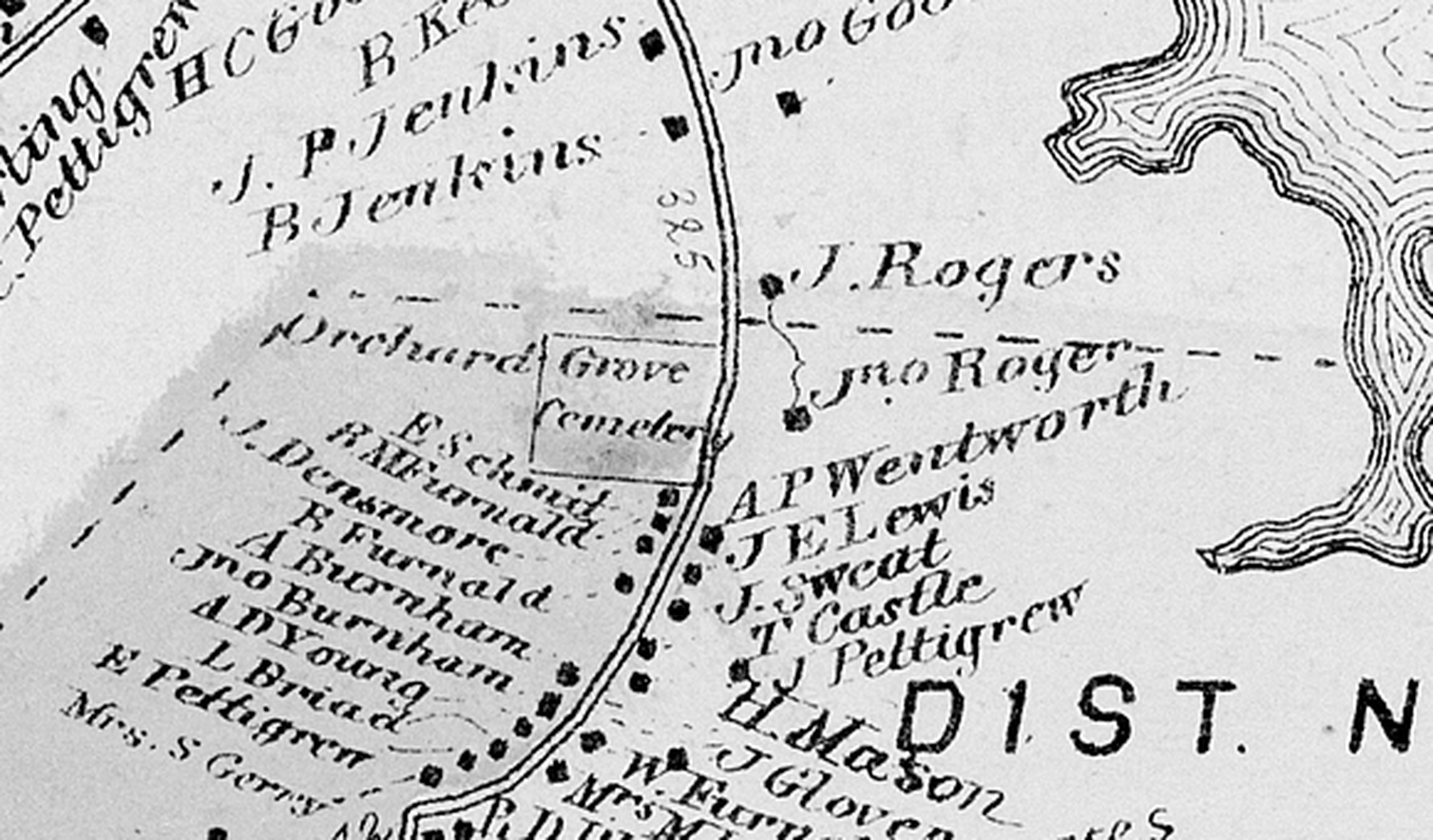
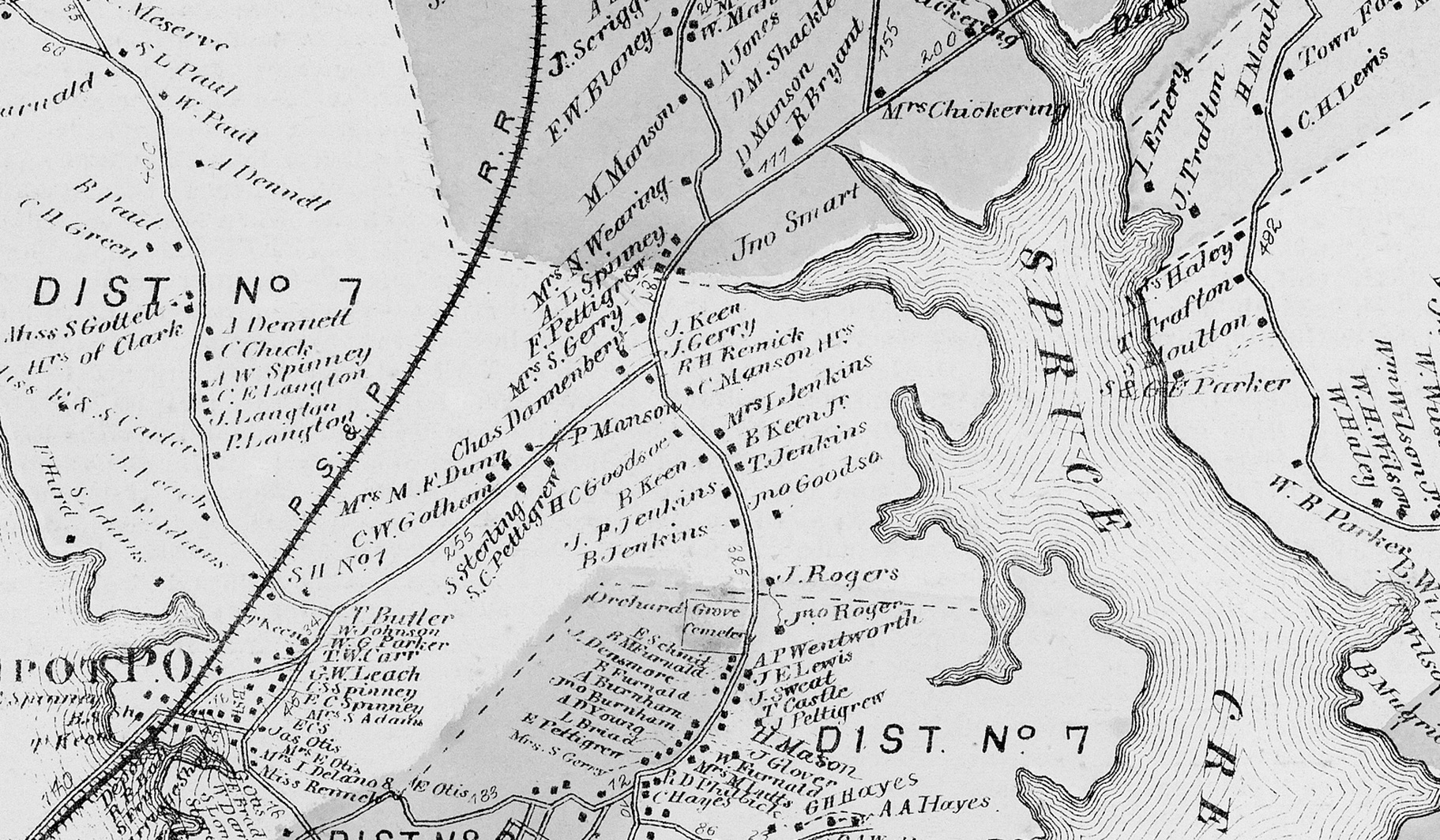
Ten days later he bought a house. On 22 July 1861 he paid five hundred dollars to Remick for sixty-six rods with a dwelling at Kittery, on the road that runs from the Navy Yard past John Rogers's house. Five weeks after that, on 28 August 1861, he married Mary Catherine Dudley at York — a civil marriage before Washington Junkins, Justice of the Peace, who was also the town clerk and attested his own ceremony.
Edward was a resident of Kittery. Mary was of York. She was twenty-one and he was twenty-seven. In six weeks he had gone from a warship's sick list to a house and a wife.
⭐ And then he went back — under his own name
This is the part of his life that says the most about him, and it is stated in a single sentence by the United States Treasury.
On 29 March 1876 the Fourth Auditor, answering the Pension Office's enquiry about this claimant, laid out the whole of his service:
"Edward H. Smith, enlisted as a Landsman, on the North Carolina, Sept 28, 1858. Served on the Sabine, Southern Star, Sabine, North Carolina, Sabine, and was discharged by order from the Sabine July 12, 1861. RE-ENLISTED AS EDWARD H. SCHMIDT, on the Mahaska, as a Second Class Fireman, April 5, 1862."
The alias is not our inference. The government wrote it down itself, in the act of certifying that Smith and Schmidt were one man and that both enlistments were his.
He had been Smith for three years — a made-up Connecticut boy with blue eyes. On 5 April 1862, married, with a house at Kittery and a ruined hand, he walked back into the Navy in the middle of a war and gave them Schmidt.
22 September 1862 — U.S.S. Mahaska, on the James River. A hospital ticket: "Edward Schmidt, 2nd C. F., affected with VULNUS SCLOPETICUM" — the naval surgeons' Latin for a gunshot wound. He had wounded himself with the discharge of a rifle, shattering the bone of his left hand and filling the wound with gunpowder.
He would not let them amputate the finger. The Navy ruled the wound did not originate in the line of duty, and that claim was rejected for the rest of his life.
On 6 December 1862 they let him go — "No. 147, Ed. H. Schmidt, a 2nd C. Fireman, has this day been discharged from the U.S. Steam Gun Boat Mahaska and from the naval service by order of the Department." That is not a time-served discharge. It came ten weeks after the rifle wound.
He rose anyway, and fast. Seven weeks later, on 24 January 1863, the Bureau of Navigation appointed him Acting Master's Mate and ordered him to the U.S.S. General Putnam. The invented landsman of 1858 was now a warrant officer under his own name.
6 April 1863 — U.S.S. Savannah. Febris continua, a continued fever. The Navy's own list of the six ships he served in does not include the Savannah. We only know he was aboard her because a surgeon wrote a ticket.
On 23 and 24 June 1864 he volunteered for something. This is Edward in the first person, from an affidavit he wrote out and swore to in March 1876:
While attached to the U.S. Steamer Commodore Hull as Acting Master's Mate at Albemarle Sound, North Carolina, on June 23 & 24, 1864, I volunteered to go with and took charge of a party to go to Plymouth, N.C., then in Confederate possession, to gain information in regard to the movements of the Confederate ram Albemarle and the fortifications, &c. To do which it was necessary to cross a portion of the Dismal Swamp. In this expedition I was successful. But the hardship and exposure to the sun brought on brain fever.
He opened that statement with a sentence worth keeping: "Though I did not make a claim on account of sunstroke, yet I will state the facts as follows." He was not asking for anything. He was telling them what happened.
Three months later, two commanders signed him ashore.
14 September 1864, aboard the Commodore Hull in Albemarle Sound, the acting assistant surgeon filled in a printed form: "You are hereby requested to receive EDWARD H. SCHMIDT, A. M. Mate, affected with MANIA…" It was approved by his own commanding officer and again by the commander of the Fourth Division of the North Atlantic Blockading Squadron.
On 29 September 1864 he was admitted to the Government Hospital for the Insane at Washington — St Elizabeths — case number 1650. The ledger records it column by column: form of disease mania; supposed cause sun stroke; duration on admission three months; age 30; nativity England; station in life Acting Master's Mate, U.S.N.
He was discharged on 20 October 1864. Twenty-one days. Result: "IMPROVED."
On that same day the Navy revoked his appointment. The Bureau of Navigation's own record: "20th Oct. 1864 his appointment was revoked on account of physical disability; the letter of revocation addressed to him at the Gov't Hospital for the Insane, near Washington, D.C."
They wrote to him at the asylum to tell him he was no longer an officer. The Bureau's formal ground was physical disability — which is not what the hospital ledger says, and is the kinder of the two words.
He came back and went to business school. He appears on the register of Comer's Commercial College in Boston, learning the work of a man who writes for a living.
Then the rest of a working life, and you can read the hand in every line of it:
- 1870 — clerk on the Navy Yard
- 1876 — ship keeper, and in his own words "totally disabled from manual labor"
- 1880 — teacher
His own description of himself, sworn in January 1876: "Age, 41 years; height, 5 feet 8 inches; complexion, dark; hair, brown; eyes, gray."
In December 1877 he swore a pension paper in Dallas County, Texas — and insisted on the form that he remained a resident of Kittery, Maine, giving Mesquite only as his post office. It was a stay, not a removal. He was drawing four dollars a month from the Concord agency for the crushed right hand, and he wanted more: he was "almost entirely deprived of the use of his right hand," and four dollars was not enough.
On 7 June 1881 he filled in one more blank, this time at Lowell, Massachusetts, on a form the Pension Office had posted him in April. His grounds, in his own hand:
said loss & contraction, the hand becoming more helpless as the years run on.
The Pension Office received it on 9 June.
He died on 17 July 1881. The claim was never decided.
Two records tell the end, and they do not agree.
The Kittery town register — a retrospective return this project had formally concluded could not exist, and found anyway — reads: "Schmidt — E. H. | July 17, 1881 | 55 years about — Gen. debility."
The newspaper reported: "Edward D. Schmidt of Kittery, an Acting Master in the Navy during the war, took an overdose of opium on Saturday, and died from the effects thereof Tuesday night."
⚑ The notice does not state intent, and nothing in it implies any. Opium and laudanum were ordinary household painkillers in 1881, sold across a counter without prescription and of wildly inconsistent strength; he had a documented seventeen-year history of head attacks, and a right hand he had been calling helpless for five years. What the record says is that he took too much and died. It does not say why, and neither will we.
He is buried at Orchard Grove, Kittery, in lot 39, under a stone that three separate surveys have read the same way: "E. H., Master's Mate, U.S.N." A New Deal survey of veterans' graves marked the lot Civil War.
The house went in 1883. Under a licence from the Judge of Probate the administrator sold it for four hundred and fifty dollars to Clarissa H. Keen of Kittery, widow — one widow selling it and another buying it, Mary having remarried by then and left the administration. Edward had paid five hundred for it twenty-two years earlier.
What was left came to two hundred and forty-nine dollars and seventy-four cents. The court took twelve dollars for future expenses and divided the rest four ways in September 1884 — fifty-nine dollars and forty-three and a half cents each, to his daughters Adelaide, Lottie and Jennie, and to his son.
And in January 1885 the Boston pension agency struck him off, still not knowing he was dead. The form reads: "Edward H. Schmidt, who was a pensioner on the rolls of this Agency under Certificate No. 2255, and who was last paid at $6 to 4 June 1881, has been dropped because of his failure to claim pension for three years."
He had been dead three and a half years. His last payment ran out forty-three days before he died, and the six dollars a month he was owed for those forty-three days — about eight dollars and forty cents — was never paid to anybody. The Commissioner confirmed the figure to Mary in 1912, when she was seventy-one and asking.
She had sworn a declaration for a widow's pension on the strength of his service that May. It was rejected.
Otto Schmidt of St Pancras was a teacher of languages. It is the word on his marriage entry, on his children's baptisms, on a birth certificate and on his wife's death certificate — the one thing the London records agree about him.
His son left that house at eight, that country at eighteen, and never went back. He crossed an ocean alone, took another man's name, went to war, lost the use of a hand, walked through a Confederate-held swamp on his own offer, spent three weeks in an asylum, and came home to a small house on the Navy Yard road.
And in the last record made of him while he was working, the census taker asked his occupation and wrote down: teacher.
The records behind this
- Birth and baptism — the St Pancras register with its date-of-birth column, read at 4x: born 17 September 1833, baptised 24 August 1837, sixteen days after his parents' marriage. B-06, B-09, G-01.
- His parents — Otto Schmidt, teacher of languages, and Henrietta, who died 23 June 1842 at Parsons Green; the family's London paper trail. B-07, B-08, B-10, V-387, V-389, V-391, V-393, X-RLF1842.
- 1851 — the England census, read at magnification, with the occupation column zoomed. C-04.
- The enlistment and the ship — the New York rendezvous return of 2 October 1858 and the U.S.S. Sabine's own 1859 muster roll, read at native resolution. P-44, P-45.
- The right hand, both accounts — his sworn declaration for an original invalid pension, in his own hand (P-27, P-19); and the Surgeon General's 1876 quotation of the Sabine's medical log for 26 February – 7 March 1861 (P-08, P-09, P-18, P-33).
- ⭐ The alias and the re-enlistment — the Fourth Auditor of the Treasury, 29 March 1876, certifying that Edward H. Smith and Edward H. Schmidt are one man and naming both enlistments; the New York rendezvous return of the week ending 2 October 1858 with its Connecticut birthplace; the Bureau of Navigation's appointment and revocation. P-08, P-21, P-44, P-30.
- The discharges — from the Sabine 12 July 1861, and the original certificate from the Mahaska of 6 December 1862, "by order of the Department." P-08, P-11, P-17.
- The Kittery house and the marriage — the Remick deed of 22 July 1861 and the York town register of 28 August 1861, image-read three times. D-40, D-27, D-28, V-11.
- The hospital tickets, originals on Form G — Mahaska 22 September 1862, Savannah 6 April 1863, Commodore Hull 14 September 1864. P-40, P-41, P-42.
- St Elizabeths — the Government Hospital for the Insane, register of cases, entry 1650. P-43.
- The Dismal Swamp — his own affidavit of 6 March 1876. P-29.
- The working life — Comer's Commercial College; the 1880 census of Kittery. S-01, S-07, C-05.
- Texas and Lowell — the increase declarations of 19 December 1877 and 7 June 1881. P-28, P-31.
- The death — the Kittery retrospective return, and the newspaper notice. V-386, N-05.
- The grave — three independent cemetery readings and the WPA war-veterans survey placing lot 39. B-11, B-15, B-19, B-20, B-21.
- The estate — inventory, licence to sell, and the decree of distribution naming the four heirs and their shares. PR-26, PR-17, PR-22, PR-23.
- The house sold — administrator to Clarissa H. Keen, 1883, $450, matching the appraisers' valuation and Schedule A exactly. D-41, PR-19, PR-08.
- Dropped from the rolls — form 3-405, January 1885, and the Bureau docket. P-26, P-23.
- The widow's claim — sworn 20 May 1912, rejected June 1912. P-25, P-13, P-22.
What is not established
- Seven years are missing. He landed at New York in November 1851 and enlisted in October 1858. Nothing in this file covers the interval.
- ⭐ How the right hand was actually injured. His sworn account (crushed veering ship's chain) and the Sabine's own medical log (catarrh, an old finger ulcer, a fracture on 3 March, amputation on the 7th) describe the same week and the same hand by two different mechanisms. Neither has been set aside.
- The epileptic fits. The ship's surgeon recorded in March 1861 that he "has suffered repeatedly from epileptic fit" — three and a half years before the mania. Nothing else in this file mentions it, and no conclusion is drawn from it here.
- The date his right hand was crushed. He swore on or about 26 February 1861; other papers in the same file give three other dates. The event is certain; the day is not.
- His age. The baptism register puts his birth at 17 September 1833 and that is the best evidence there is — but he swore ages in 1876, 1877 and 1881 that all imply 1834–35, and the Kittery death return says "55 years about," which would mean 1826. He was 47.
- "Edward D." The newspapers call him Edward D. Schmidt. Every cemetery reading and every official paper says E. H. or Edward A. H. The stray initial has never been explained.
- The manner of his death. See above. The newspaper states an overdose and states nothing else; the town return says general debility. No conclusion beyond that is available and none is drawn here.
- His sister Julia. A Julie Schmid married John Henry Eggers at New Orleans in June 1864, witnessed by a Maria Schmid. The certificate gives the bride's birthplace as Braunlingen in Baden, while this family is documented in England. It may be his sister. It is not claimed.
p03-edward-schmidt.md · do not edit this file —
edit the Markdown and re-run md2html.py